.png)


How to Explain Final Expense Policies Clearly and Effectively
- Lincoln De Freitas
- Dec 24, 2025
- 8 min read

For many American families, end-of-life expenses can bring unexpected financial stress right when support matters most. With the average funeral now costing over $9,000, preparing in advance has never felt so important. Final expense insurance helps middle-aged and senior adults create a cushion for their loved ones, offering peace of mind and practical protection. This guide answers the most common questions and shows what to look for when choosing a plan that fits your family’s needs.
Table of Contents
Quick Summary
Key Insight | Explanation |
1. Collect Key Policy Details | Gather information on coverage amounts, premiums, and limitations to clearly inform customers. |
2. Simplify Complex Information | Use visual aids and plain language to help families understand policy details easily. |
3. Highlight Emotional Benefits | Explain how final expense policies protect families financially during difficult times. |
4. Address Scams and Concerns | Educate customers on recognizing scams and what constitutes legitimate policies. |
5. Provide Ongoing Support | Ensure families know how to manage their policies and feel supported post-purchase. |
Step 1: Prepare Essential Information and Common Questions
Explaining final expense policies requires gathering crucial details that help potential customers understand their coverage options. Your goal in this initial step is to compile comprehensive information about policy specifics and anticipate the most common questions families have about end-of-life financial protection.
Start by collecting key policy details like coverage amounts, premium structures, and any potential limitations. Agents must provide clear, accurate information about policies, including coverage details, premium structure, and any limitations. This means researching specifics such as guaranteed issue options, age restrictions, health qualification criteria, and payout terms. Create a straightforward document that breaks down complex insurance language into easy to understand explanations. Include visual charts or tables that compare different policy types, helping potential customers quickly grasp their options.
When preparing your information package, be vigilant about potential scams. Be cautious of unsolicited mail that promises free final expense insurance quotes or guaranteed approvals. Your documentation should transparently explain how legitimate insurance applications work and what red flags consumers should watch for. Include sections that outline typical application processes, expected timeframes, and verification steps.
Pro Tip: Create a one-page quick reference guide that summarizes the most frequently asked questions about final expense policies, making complex information instantly accessible to potential customers.
Here is a comparison of common final expense policy types:
Policy Type | Main Feature | Typical Coverage Amount | Ideal For |
Guaranteed Issue | No health questions required | $5,000 - $25,000 | Those with serious health issues |
Simplified Issue | Few health questions, quick approval | $5,000 - $20,000 | Seniors in average health |
Pre-Need Insurance | Directly pays funeral provider | $2,000 - $15,000 | Those preplanning funerals |
Step 2: Simplify Policy Details for Easy Understanding
Reducing the complexity of final expense insurance requires a strategic approach to help potential customers grasp critical information quickly and confidently. Your primary goal is to transform technical policy language into clear, accessible explanations that anyone can understand.
Final expense policies feature a simplified underwriting process that allows applicants to answer just a few health-related questions instead of completing a comprehensive medical examination. Take advantage of this accessibility by creating visual aids like comparison charts, infographics, and plain language summaries. Break down each policy component into digestible sections focusing on key aspects such as coverage amount, premium cost, qualification requirements, and payout conditions. Use everyday language that avoids insurance jargon and speaks directly to your audience’s concerns about protecting their loved ones.
When explaining policy details, anticipate potential questions and address them proactively. Consider creating a side-by-side comparison of different policy types that highlights unique features, potential limitations, and benefits. Demonstrate how each policy option can meet specific family needs by providing real world context and relatable scenarios. Visual storytelling can help transform abstract insurance concepts into meaningful personal protection strategies.
Pro Tip: Design a one-page quick reference document that uses simple language, bullet points, and clear headings to make policy information instantly understandable for families exploring final expense insurance options.
Step 3: Highlight Family Protection and Key Benefits
Communicating the profound value of final expense insurance goes far beyond presenting numbers. Your mission is to help families understand how these policies provide critical financial protection during their most vulnerable moments. This means transforming insurance from an abstract concept into a tangible safety net for loved ones.

Final expense insurance offers an easy and relatively low-cost way to cover end-of-life expenses, with policy benefits ranging from $5,000 to $20,000 or more. When discussing these benefits, focus on emotional and practical aspects. Paint vivid pictures of how these policies prevent financial burdens during grief. Explain how the funds can cover funeral costs, outstanding medical bills, and provide a small financial cushion for families struggling with sudden loss. Show how even a modest policy can eliminate significant financial stress during an already difficult time.
To truly connect with potential customers, share real world scenarios that demonstrate the policy’s importance. Compare the potential financial strain of unexpected funeral expenses with the peace of mind a final expense policy provides. Use storytelling techniques that help families visualize protecting their loved ones from potential financial hardship. Emphasize that these policies are not just about money, but about showing care and responsibility toward family members during their most challenging moments.
Pro Tip: Create emotional impact by developing a brief presentation that includes both financial data and personal stories illustrating how final expense insurance provides genuine family protection.
To help families understand final expense benefits, see the examples below:
Scenario | Without Policy | With Final Expense Insurance |
Unexpected funeral costs | Family pays $9,000 out-of-pocket | Policy covers expenses, easing burden |
Outstanding medical bills | Heirs responsible for unpaid costs | Benefits can be used for settlements |
Need for immediate funds | Delayed access, possible debt | Swift payout offers flexible support |
Step 4: Address Specific Concerns with Compassion
Guiding families through final expense insurance requires more than presenting facts. Your approach must blend empathy, transparency, and practical reassurance. The goal is to create a safe space where potential customers feel heard and understood while addressing their most sensitive financial concerns.
Be cautious of unsolicited mail that promises you a free final expense insurance quote or a guaranteed approval for a life insurance policy, as many people have fallen victim to these scams. When discussing policy options, prioritize building trust by highlighting potential warning signs and explaining the legitimate application process. Help families understand the difference between authentic insurance offerings and predatory marketing tactics. Share specific examples of red flags to watch for, such as unsolicited high pressure sales calls or promises of guaranteed approval without any medical screening.
Final expense insurance allows your loved ones to use the payout as needed, providing remarkable flexibility during challenging times. During conversations, emphasize this key benefit. Explain how the funds can be used for funeral expenses, outstanding medical bills, debt settlement, or any other urgent family needs. Create scenarios that demonstrate the policy’s adaptability, showing families that this insurance offers genuine financial breathing room when they need it most. By presenting the policy as a compassionate tool for family protection, you transform a financial product into a meaningful emotional safety net.
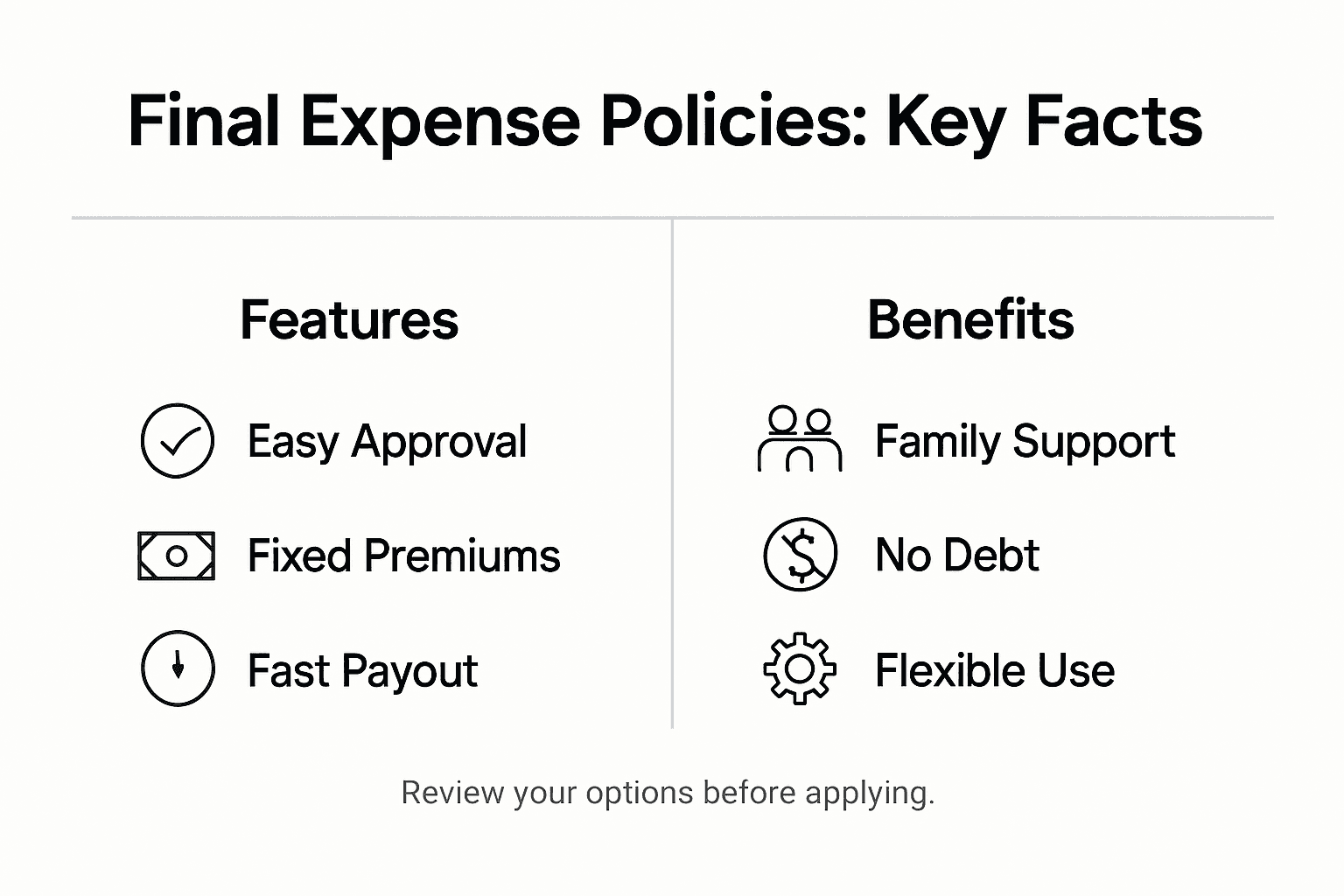
Pro Tip: Develop a personal storytelling approach that connects insurance details with genuine human experiences, helping families see beyond numbers to the real emotional value of final expense protection.
Step 5: Confirm Clarity and Encourage the Next Step
The final stage of explaining final expense insurance involves ensuring complete understanding and guiding families toward confident decision making. Your role is to transform information into actionable clarity, helping potential customers feel empowered and supported throughout their insurance journey.
Policies for final expense insurance can be complex, but it is essential to understand them to make informed decisions. Create an interactive review process that allows families to ask questions, confirm their understanding, and feel completely comfortable with their potential insurance choice. Walk through each policy detail systematically, encouraging open dialogue and creating space for honest conversations about their specific needs and concerns. Use simple language, visual aids, and relatable examples to break down complex insurance concepts into digestible information.
Policy management involves keeping the policy up-to-date, which may require updating the beneficiary’s information or adjusting the death benefit amount. Explain the ongoing nature of insurance policies, showing families that this is not a one-time transaction but a flexible financial tool that can adapt to their changing life circumstances. Demonstrate how they can modify their policy, add or change beneficiaries, and adjust coverage as their family’s needs evolve. Provide clear guidance on follow-up steps, documentation requirements, and communication channels for future policy management.
Pro Tip: Develop a personalized follow-up system that includes a welcome packet, clear contact information, and a scheduled check-in to ensure families feel continuously supported after choosing their final expense insurance policy.
Make Final Expense Insurance Clear and Compassionate for Your Family
Understanding final expense insurance can be overwhelming for many families due to confusing policy details and concerns about scams and costs. This article highlights the key challenges of simplifying policy language and addressing sensitive financial questions with empathy. At LD Financial Services, we share your goal of providing compassionate, transparent, and affordable solutions that protect your loved ones from unexpected end-of-life expenses such as funeral costs and unpaid medical bills.
Take control today by exploring our range of simplified final expense insurance options including guaranteed issue policies with quick approvals and fixed premiums. Our licensed agents specialize in guiding middle-aged and senior adults through straightforward applications and clear benefit explanations so you can feel confident in your family’s financial legacy.

Ready to protect your family with final expense insurance that is easy to understand and tailored to your needs? Visit LD Financial Services now to book an appointment with a caring agent who will help you navigate your best coverage options and answer all your questions with compassion and clarity.
Frequently Asked Questions
How can I prepare essential information to explain final expense policies?
To prepare essential information, gather details about coverage amounts, premium structures, and limitations. Create a document that simplifies complex insurance terms into easy-to-understand explanations, and consider using visual aids like charts to compare policy types.
What are some common questions families have about final expense insurance?
Families often ask about coverage amounts, the application process, and how the funds can be used. Compile a one-page quick reference guide summarizing frequently asked questions to provide instant clarity and improve understanding.
How can I simplify complex final expense policy details for potential customers?
To simplify policy details, use plain language and avoid jargon when explaining coverage amounts and qualifications. Create visual comparisons that highlight key features and benefits of different policy types, making them easier to digest for families.
What key benefits of final expense insurance should I highlight?
When discussing final expense insurance, focus on its ability to alleviate financial burdens during difficult times. Emphasize how policies cover funeral costs and outstanding bills, effectively providing peace of mind for families facing unexpected expenses.
How do I address specific concerns families may have about final expense policies?
Address specific concerns with empathy and clarity by openly discussing potential scams and the legitimate application process. Share examples of red flags and reassure families about the policy’s flexibility in meeting various financial needs, creating a compassionate understanding of its value.
What steps can I take to confirm clarity and guide families in their decision-making process?
To confirm clarity, facilitate an interactive review process where families can ask questions and feel comfortable with their choices. Offer clear guidance on policy management, ensuring they understand how to keep their insurance current and adaptable to changing needs.
Recommended