.png)


What Is Funeral Planning Insurance and Why Families Need It
- Lincoln De Freitas
- Jan 2
- 8 min read

Finding affordable funeral planning insurance can feel daunting for many Canadian families, especially with the rising cost of end-of-life services. More than eight in ten seniors worry about leaving behind significant expenses that could strain their loved ones. Unlike typical American policies, Canadian funeral insurance offers tailored options for those seeking peace of mind. This guide provides straightforward answers, comparing coverage types and practical steps to help you secure financial stability for your family’s future.
Table of Contents
Key Takeaways
Point | Details |
Funeral Planning Insurance Provides Relief | It alleviates financial burdens and ensures peace of mind for families facing end-of-life expenses. |
Different Policy Types Exist | Options include Term Life, Whole Life, Guaranteed Issue, and Final Expense insurance to meet varying needs. |
Understanding Costs is Essential | Evaluating premiums, coverage amounts, and payout structures is crucial for effective financial planning. |
Explore Alternatives | Consider alternatives such as savings accounts, prepaid contracts, and life insurance riders for flexible planning solutions. |
Defining Funeral Planning Insurance and Its Purpose
Funeral planning insurance represents a strategic financial instrument designed to alleviate the emotional and economic burdens families face during an already challenging time. This specialized insurance product provides a structured approach to managing end-of-life expenses, ensuring that loved ones are not overwhelmed by unexpected funeral costs.
At its core, funeral planning insurance is a pre-arranged financial solution that covers funeral service expenses, cremation, burial costs, and related memorial arrangements. Unlike traditional life insurance, these policies are specifically tailored to address the immediate financial requirements surrounding an individual’s final arrangements. The regulatory frameworks developed to protect consumers ensure that these insurance products maintain high standards of consumer protection and value.
The primary purpose of funeral planning insurance extends beyond mere financial coverage. It offers families peace of mind, knowing that comprehensive arrangements have been pre-planned and financially secured. This approach allows individuals to make thoughtful decisions about their final wishes while protecting their families from potential financial strain during a period of grief. By selecting a funeral planning insurance policy, individuals can lock in current pricing, potentially saving their families significant expenses that might otherwise increase over time.
Professional Tip: Research and compare multiple funeral planning insurance options, considering factors like coverage amount, premium stability, and specific service inclusions to find the most comprehensive protection for your family’s needs.
Types of Funeral Planning Insurance Policies
Funeral planning insurance encompasses several distinct policy types, each designed to meet different financial needs and personal preferences. Understanding these variations helps individuals select the most appropriate coverage for their specific circumstances and end-of-life planning objectives.
The primary types of funeral planning insurance include term life policies, whole life policies, and guaranteed issue policies. Term life policies provide coverage for a specific period, typically offering lower premiums but limited long-term protection. Whole life policies, in contrast, offer lifelong coverage with a fixed premium and potential cash value accumulation. Guaranteed issue policies are particularly valuable for individuals with pre-existing health conditions, as they require no medical examination and provide guaranteed acceptance.
Each policy type presents unique advantages and considerations. Term life policies work well for those seeking temporary, affordable coverage during specific life stages. Whole life policies appeal to individuals wanting permanent protection and potential investment benefits. Final expense insurance from LD Financial Services specifically targets funeral and end-of-life expenses, offering specialized coverage that addresses immediate financial burdens faced by families during challenging times. These policies typically provide smaller death benefits focused exclusively on funeral costs, medical expenses, and outstanding debts.
Professional Tip: Compare multiple funeral planning insurance policies, considering factors like premium costs, coverage amounts, and specific exclusions to find the most comprehensive protection tailored to your individual needs and family circumstances.
Here’s a comparison of the main funeral planning insurance policy types:
Policy Type | Who It Suits Best | Key Financial Feature |
Term Life | Younger or budget-focused | Low premiums, set time period |
Whole Life | Planning for lifelong needs | Fixed premiums, cash value |
Guaranteed Issue | Pre-existing health conditions | No medical exam, instant issue |
Final Expense | Covering only funeral costs | Smaller benefit, targeted use |
How Funeral Insurance Coverage Works
Funeral insurance represents a specialized financial protection mechanism designed to alleviate the economic burden of end-of-life expenses for families during their most vulnerable moments. This unique insurance product provides a targeted approach to managing funeral-related costs, ensuring that loved ones can focus on grieving and remembering rather than financial stress.

The core mechanism of funeral insurance is straightforward: when an insured individual passes away, the policy triggers a specific payout to cover funeral-related expenses. This payout typically includes comprehensive coverage for critical services such as casket selection, burial or cremation fees, memorial service arrangements, transportation costs, and associated administrative expenses. Beneficiary designation plays a crucial role, as the policyholder can pre-select who will receive the funds, ensuring a smooth and controlled distribution of financial resources.
Unlike traditional life insurance policies, funeral insurance focuses specifically on immediate end-of-life expenses. The coverage amount is usually smaller and more precisely tailored to funeral costs, which helps keep premiums affordable for individuals on fixed incomes. Beneficiaries can typically receive the funds as a lump sum or have the insurance company directly pay funeral service providers, offering flexibility and reducing potential financial complications during an already challenging time. Some policies even allow partial prepayment of funeral expenses, giving individuals more control over their final arrangements.
Professional Tip: Review your funeral insurance policy details carefully, ensuring you understand exact coverage limits, payout mechanisms, and any potential restrictions to prevent unexpected financial gaps for your loved ones.
Eligibility, Application, and Approval Process
Navigating the funeral insurance application process requires understanding the specific eligibility criteria and documentation requirements that vary across different insurance providers. Individuals considering funeral planning insurance must carefully evaluate their personal circumstances, health status, and financial objectives to determine the most appropriate coverage options.
Eligibility typically depends on several key factors, including age, health condition, and citizenship status. Age ranges for funeral insurance applications usually span from 50 to 85 years old, with most providers offering specialized policies for seniors. Final expense insurance from LD Financial Services provides flexible options that accommodate various health backgrounds, including guaranteed issue policies designed for individuals with pre-existing medical conditions. These policies eliminate traditional medical examination requirements, making coverage more accessible for those who might otherwise struggle to obtain insurance.
The application process generally involves a straightforward series of steps: initial consultation, health questionnaire completion, coverage selection, and policy underwriting. Applicants should prepare essential documentation including government-issued identification, current medical records, and financial information. Some policies offer expedited approval processes, with some providers providing coverage decisions within hours or days. Key considerations during application include determining appropriate coverage amounts, understanding premium structures, and selecting beneficiaries who can efficiently manage end-of-life expenses.
Professional Tip: Gather all relevant medical and personal documentation before starting your funeral insurance application to streamline the process and increase your chances of quick approval.
Costs, Payouts, and Financial Considerations
Funeral insurance represents a critical financial planning tool that requires careful evaluation of costs, potential payouts, and long-term financial implications. Understanding the intricate financial landscape of these policies helps individuals make informed decisions that protect their families from unexpected economic burdens associated with end-of-life expenses.
Premium structures vary significantly based on individual factors such as age, health status, and desired coverage amount. Financial considerations in funeral insurance extend beyond simple premium calculations, encompassing complex aspects of estate planning and potential inheritance implications. Most policies offer fixed premiums that remain consistent throughout the policy’s lifetime, providing predictability for seniors on fixed incomes. Coverage amounts typically range from $5,000 to $25,000, designed to cover average funeral expenses, cremation costs, and associated administrative fees.
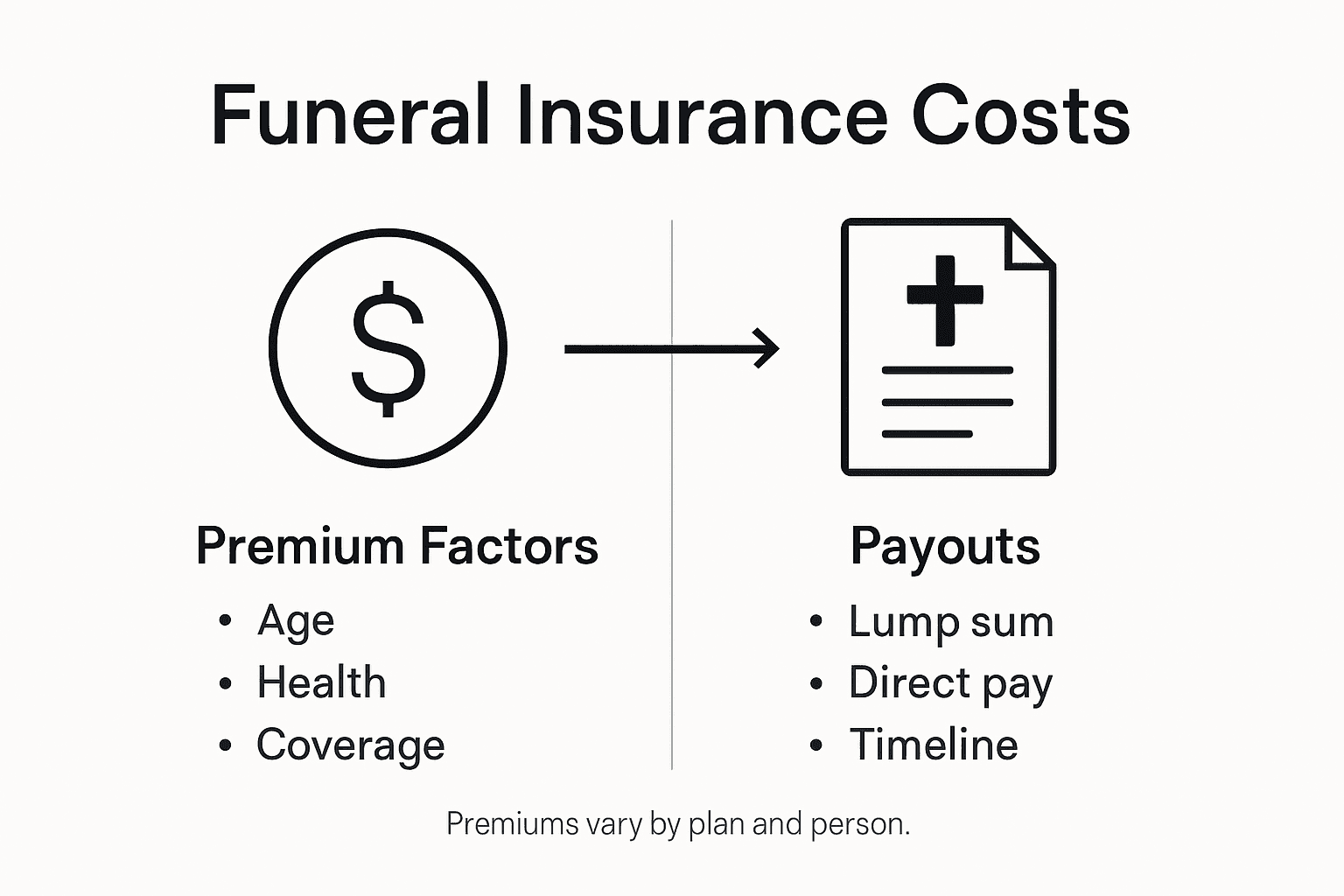
The payout mechanism represents a critical component of funeral insurance financial planning. Beneficiaries can usually receive funds as a lump sum or have the insurance company directly pay funeral service providers, offering flexibility during an emotionally challenging time. Some policies include additional benefits such as accelerated payouts for terminal illnesses or partial prepayment options. Consumers should carefully review policy details, understanding potential exclusions, waiting periods, and specific conditions that might impact payout eligibility. Comparing multiple insurance providers and examining their specific financial terms can help individuals identify the most comprehensive and cost-effective funeral insurance solution.
Professional Tip: Request detailed written breakdowns of premium structures, payout limits, and potential fees from multiple insurance providers to make a comprehensive financial comparison.
Common Pitfalls and Alternatives to Funeral Insurance
Navigating the complex landscape of funeral insurance requires careful consideration of potential risks and alternative financial strategies. Consumers must remain vigilant about understanding policy limitations, potential exclusions, and the broader spectrum of end-of-life financial planning options available beyond traditional funeral insurance models.
Key pitfalls in funeral insurance often stem from misunderstandings about coverage scope and provider reliability. Regulatory bodies have introduced critical consumer protection measures to address these concerns, but individuals must still conduct thorough due diligence. Common risks include hidden fees, restrictive payout conditions, and policies that may not fully cover escalating funeral expenses. Some consumers discover too late that their chosen policy contains significant limitations or exclusions that compromise their intended financial protection.
Alternative approaches to funeral expense planning offer diverse options for those seeking flexibility and comprehensive financial protection. Traditional strategies include establishing dedicated savings accounts, purchasing comprehensive life insurance with funeral expense riders, and exploring pre-paid funeral contracts. Community-based options, such as funeral cooperative programs or family-managed trust arrangements, can provide more personalized and potentially cost-effective solutions. Each alternative presents unique advantages and challenges, requiring individuals to carefully assess their specific financial circumstances, family dynamics, and long-term planning objectives.
Use this table to compare funeral insurance to its main alternatives:
Approach | Flexibility | Family Control | Typical Costs |
Funeral Insurance | Moderate | Limited | Predictable |
Dedicated Savings Account | High | Full | Variable, self-set |
Prepaid Funeral Contract | Low | Very limited | Set by provider |
Life Insurance Rider | Moderate to High | Some | Adds to premium |
Professional Tip: Consult with a financial advisor to create a comprehensive end-of-life financial strategy that combines multiple approaches, ensuring maximum flexibility and protection for your family.
Protect Your Family with Trusted Funeral Planning Insurance Solutions
Facing the reality of funeral expenses can bring uncertainty and emotional stress. This article highlights the importance of funeral planning insurance to ease the financial burden on your loved ones during life’s most difficult moments. If you want to secure peace of mind through affordable, transparent coverage with fixed premiums and quick approval, it is crucial to explore options tailored for your unique needs including guaranteed issue life insurance and permanent policies.

Start planning today with LD Financial Services, your trusted partner in final expense insurance. Our compassionate team simplifies the application process and helps you find the best policy to protect your family’s future while locking in current costs. Don’t wait until it is too late. Visit LD Financial Services now and book an appointment with a licensed agent to build your financial legacy with confidence.
Frequently Asked Questions
What is funeral planning insurance?
Funeral planning insurance is a specialized financial product designed to cover funeral-related expenses, such as burial or cremation costs, memorial service arrangements, and other associated expenses. It provides families with peace of mind by ensuring that funds are readily available to manage end-of-life costs without undue financial strain.
Why do families need funeral planning insurance?
Families need funeral planning insurance to alleviate the economic and emotional burdens associated with unexpected funeral costs. By securing a policy, individuals can pre-plan and financially protect their loved ones from the financial stress that often accompanies end-of-life arrangements.
How do different types of funeral planning insurance policies compare?
There are several types of funeral planning insurance policies, including term life policies, whole life policies, guaranteed issue policies, and final expense insurance. Term policies offer temporary coverage, while whole life policies provide lifelong protection with cash value. Guaranteed issue policies are tailored for individuals with health issues, requiring no medical exam. Final expense insurance focuses specifically on funeral costs, usually offering smaller benefit amounts.
What factors affect the cost of funeral insurance?
The cost of funeral insurance is primarily influenced by factors such as the applicant’s age, health status, and the desired coverage amount. Most policies offer fixed premiums that remain stable over time, which is beneficial for seniors on fixed incomes. It’s essential for individuals to compare premiums and coverage options to find policies that best align with their financial situation.
Recommended