.png)


Role of Funeral Expenses in Family Planning
- Lincoln De Freitas
- Dec 26, 2025
- 7 min read

Most American families are surprised to discover that funeral costs can easily surpass twelve thousand dollars, leaving loved ones overwhelmed by hidden fees and confusing requirements. Planning end-of-life expenses matters now more than ever, especially when emotional stress can lead to costly decisions. This guide demystifies common funeral expenses and uncovers affordable final expense insurance solutions, empowering you to protect your family’s finances with confidence and clarity.
Table of Contents
Key Takeaways
Point | Details |
Understanding Funeral Expenses | Funeral costs encompass various elements, often influenced by cultural and personal factors, making planning essential to avoid overspending. |
Final Expense Insurance | This insurance provides targeted coverage for immediate funeral costs, offering financial relief to families during a challenging time. |
Proactive Financial Planning | Early discussions about funeral arrangements and budgeting can prevent significant financial distress, ensuring families are better prepared. |
Comparing Insurance Options | Evaluating different funding sources, such as final expense insurance and pre-paid plans, helps families make informed financial decisions. |
Defining Funeral Expenses and Common Misconceptions
Funeral expenses represent far more than a simple monetary transaction they are complex financial and emotional investments that require careful understanding. Many families unknowingly spend significant resources without fully comprehending the true landscape of end-of-life costs. Sociological research reveals that funeral expenditures are deeply influenced by cultural and psychological factors, often driving families toward unnecessary financial strain.
Contrary to popular belief, funeral costs are not standardized and can vary dramatically based on multiple factors including geographic location, personal preferences, and service selections. The Funeral Consumers Alliance highlights several widespread misconceptions about mandatory funeral requirements, demonstrating that many families overspend due to misunderstandings about legal obligations and necessary services. Typical funeral expenses encompass several key categories:
Casket or urn selection
Embalming and body preparation
Funeral service venue costs
Transportation and hearse fees
Burial or cremation expenses
Administrative and documentation charges
Understanding these components helps families make more informed and financially prudent decisions during an emotionally challenging time. Some expenses can be significantly reduced by knowing legal alternatives and consumer rights. For instance, families are not legally required to purchase elaborate caskets or use all funeral home services, which can substantially lower overall costs.
Here is a summary of how different factors influence funeral costs:
Factor Affecting Cost | Influence on Total Cost | Example Impact |
Geographic Location | Alters provider pricing | Urban areas more costly |
Cultural Traditions | Adds ceremonial requirements | Rituals increase spend |
Personal Preferences | Drives choices of products | Premium casket chosen |
Regulatory Environment | Limits or expands options | Local laws require fees |
Service Customization | Tailors scope and scale | Simple vs. lavish event |
Pro tip: Always request a detailed price list from funeral providers and compare multiple options to understand the full range of potential expenses before making final arrangements.
Types of Funeral Costs and Their Impact
Funeral costs represent a complex financial landscape that varies dramatically across different cultural and economic contexts. Global research reveals that funeral expenses are influenced by intricate social and regional factors, creating a nuanced financial burden for families navigating end-of-life arrangements. These expenses are not uniform but instead reflect a delicate interplay of personal choices, cultural expectations, and economic constraints.
The primary categories of funeral costs typically include:
Direct funeral service fees
Casket or cremation container expenses
Body preparation and embalming charges
Cemetery or crematorium fees
Memorial service and venue costs
Transportation and hearse expenses
Administrative documentation and legal paperwork
Comprehensive studies have demonstrated that funeral overspending is a significant global phenomenon driven by social pressures and inadequate regulatory frameworks. Many families find themselves financially strained by expectations to provide elaborate memorial services or purchase expensive burial equipment. These expenses can range from modest amounts to tens of thousands of dollars, depending on regional customs, personal preferences, and family financial capacity.

Understanding the nuanced breakdown of funeral costs allows families to make more informed and financially responsible decisions during emotionally challenging times. By recognizing that many expenses are optional and can be tailored to individual budgets, individuals can develop more strategic approaches to end-of-life planning.
Pro tip: Request itemized price lists from multiple funeral providers and compare comprehensive costs to identify potential areas for reducing unnecessary expenses.
How Final Expense Insurance Works
Final expense insurance represents a specialized financial solution designed to alleviate the monetary burden of end-of-life costs for families. Specifically structured as a type of whole life policy, this insurance provides targeted coverage for funeral expenses and immediate financial needs, offering a pragmatic approach to managing potentially overwhelming funeral-related financial challenges.
The primary characteristics of final expense insurance include:
Smaller death benefit amounts (typically $5,000 to $25,000)
Simplified application processes
No medical exam requirements in many cases
Guaranteed acceptance for most applicants
Fixed premium rates
Immediate coverage upon approval
Unlike traditional life insurance policies that aim to replace long-term income or provide extensive financial protection, final expense insurance focuses exclusively on covering immediate end-of-life expenses. These policies are particularly attractive for older adults or individuals with health conditions that might disqualify them from standard life insurance coverage. The funds can be used flexibly for funeral costs, outstanding medical bills, cremation expenses, or other immediate financial obligations.
The application and payout process is typically straightforward. Beneficiaries receive a predetermined cash benefit upon the policyholder’s death, which can be used without strict restrictions. This provides families with financial breathing room during an emotionally challenging period, ensuring that funeral expenses do not become an additional source of stress.
Pro tip: Compare multiple final expense insurance providers and carefully review policy details to ensure the coverage matches your specific end-of-life financial planning needs.
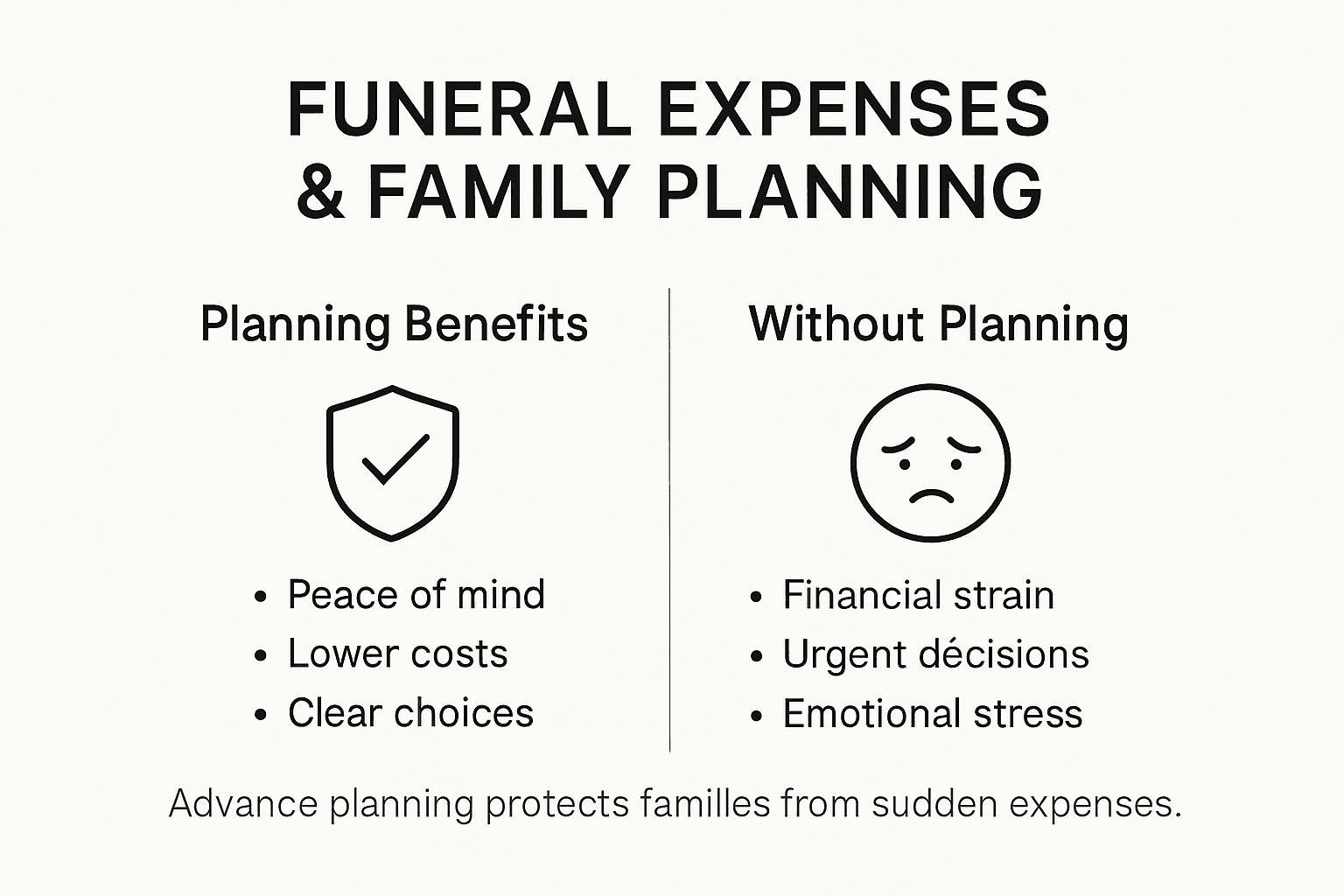
Financial Burdens on Families Without Planning
Comprehensive research reveals the devastating financial consequences families face when end-of-life expenses are not planned, highlighting the critical importance of proactive financial preparation. The absence of strategic planning can transform an already emotionally challenging period into a potentially catastrophic financial crisis for grieving families.
The financial impact of unplanned funeral expenses can be substantial and multifaceted:
Average unexpected funeral costs exceeding $12,000
Potential long-term household debt
Increased stress and emotional strain
Potential work disruptions
Compromised family financial stability
Risk of falling into funeral poverty
Studies from the University of York have documented the profound economic challenges created by inadequate funeral planning, particularly among vulnerable population segments. Families without appropriate financial preparations often find themselves confronting a perfect storm of emotional grief and overwhelming financial obligations. The sudden need to cover funeral expenses, outstanding medical bills, and administrative costs can push families into significant economic hardship, sometimes requiring years to recover financially.
The ripple effects of unplanned funeral expenses extend far beyond immediate monetary concerns. Families may be forced to take on high-interest personal loans, deplete retirement savings, or rely on credit cards to manage unexpected costs. This financial strain can compromise long-term economic security, create interpersonal tensions, and exacerbate the already difficult process of mourning a loved one.
Pro tip: Start discussing and planning funeral financial arrangements early, and consider establishing a dedicated savings fund or exploring final expense insurance to protect your family from potential economic vulnerability.
Comparing Insurance Options for Funeral Expenses
Global research demonstrates the complex landscape of funeral financing methods, revealing multiple strategies for managing end-of-life expenses. Understanding the nuanced differences between insurance options can help families make more informed financial decisions during challenging times.
The primary funeral expense insurance options include:
Final Expense Insurance
Smaller coverage amounts
Guaranteed acceptance
No medical exam required
Fixed premium rates
Pre-Paid Funeral Plans
Direct contractual arrangements with funeral homes
Locked-in current pricing
Limited flexibility
Traditional Life Insurance
Larger coverage amounts
Medical underwriting required
More comprehensive financial protection
Detailed comparisons reveal significant variations in burial insurance products, each designed to address specific financial planning needs. Final expense insurance emerges as a particularly attractive option for individuals seeking simplified coverage without extensive medical screening. These policies typically offer smaller death benefits specifically targeted toward funeral costs and immediate financial obligations.
The selection process requires careful evaluation of personal health, financial capacity, and specific family circumstances. Some individuals might benefit from combining multiple strategies, such as maintaining a final expense policy while also establishing a dedicated savings account for funeral-related expenses. Understanding the nuanced differences between insurance products can prevent potential financial vulnerabilities and provide peace of mind for families.
The following table compares funeral funding options to help families select the best approach:
Funding Option | Key Advantage | Main Limitation |
Final Expense Insurance | Fast access to funds | Lower coverage limits |
Pre-Paid Funeral Plans | Fixed price security | Less flexibility if moving |
Traditional Life Insurance | Broad financial support | Medical screening required |
Personal Savings | Full control | Can be depleted unexpectedly |
Pro tip: Consult with a licensed insurance professional to conduct a comprehensive review of your specific funeral expense insurance needs, considering your health status, budget, and long-term financial goals.
Secure Your Family’s Future by Planning Funeral Expenses Today
Understanding the heavy financial burden that unplanned funeral expenses impose on families is crucial as highlighted in the article. The emotional strain combined with unexpected costs can leave lasting hardships. Final expense insurance offers a compassionate, transparent, and affordable way to safeguard your loved ones from this challenge by covering funeral expenses, medical bills, and unpaid debts with simplified applications and fixed premiums.
Take control now by exploring tailored insurance solutions designed especially for middle-aged and senior adults who want to protect their family’s financial legacy. Learn how guaranteed issue life insurance and permanent policies can bring peace of mind during difficult times. Visit LD Financial Services to discover options and book an appointment with a licensed agent committed to guiding you every step of the way.
Planning ahead is the key to easing your family’s emotional and financial burden. Act now to secure affordable coverage and maintain your family’s stability during life’s most challenging moments.
Explore Final Expense Insurance Solutions
Book Your Appointment with a Licensed Agent
Learn More About Life Insurance Options

Frequently Asked Questions
What are the main types of funeral expenses?
Funeral expenses typically include direct service fees, casket or cremation container costs, body preparation and embalming charges, cemetery or crematorium fees, memorial service costs, transportation expenses, and administrative documentation fees.
How can families reduce funeral costs?
Families can reduce funeral costs by understanding their legal rights, comparing prices from multiple providers, and recognizing that many services and products, such as elaborate caskets, are optional. Requesting itemized price lists can also help identify areas to cut expenses.
What is final expense insurance and how does it work?
Final expense insurance is a type of whole life insurance designed to cover funeral costs and other immediate financial needs upon the policyholder’s death. It usually offers smaller coverage amounts, no medical exams, and guarantees acceptance, providing immediate financial relief for families during a challenging time.
Why is it important to plan for funeral expenses in advance?
Planning for funeral expenses in advance helps families avoid unexpected financial burdens during an emotionally challenging time. Without proper planning, families may face significant costs, long-term debt, or financial instability due to unanticipated expenses.
Recommended